|
|
Resources: Instructive Approaches to Health and Education
| ||||||||||||||||||||||||||||||||||||||||||||||||||||||||
|
|
Poverty, Health, & Environment |
Focus on Haiti - Key Resources for Haiti Disaster Efforts
Cochrane Evidence Aid, Risk Management, Disaster Prevention, Preparedness
and Management Communication and Media Resource Materials The citizens of Haiti are currently dealing with devastation and suffering
that few of us can even imagine. The 7.0-magnitude earthquake near Port-au-Prince, Haiti, on January 12,
2010, has devastated the city and surrounding areas. The earthquake has
reduced large parts of the the country's capitol to rubble and devastated
their already poor infrastructure making the task of delivering aid extremely difficult. Official estimates from the region say that approximately 3 million people —
one third of the population of Haiti — have been affected by this
disaster and that an estimated 200,000 people may have died as a result of
the earthquake. Port-au-Prince's 3 largest medical centers have been devastated. |
|
|
On-line
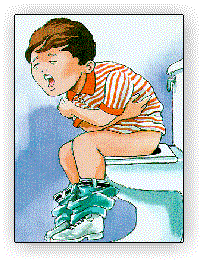
Diarrheal
Disease Course - Global Health eLearning Center - USAID
Time: Approximately 1 hour, 30 minutes
Objectives: By the end of this course you will be able to:
Describe the magnitude of diarrheal diseases among children
under the age of five in developing countries
Explain the main principles of diarrhea case management in
young children
Discuss what can be done to prevent diarrhea in young
children in developing countries and obstacles that must be overcome to do so
On-Site Resources
|
|||||||||||||||||
 |
Google Scholar "Stand on the shoulder of giants" - a free literature search database with links to full text. It apparently indexes all of PubMed, PubMed Central, most journals in the Directory of Open Access Journals, and much, much more. Google Scholar also provides citation tracking - each article has a link to all articles that cite it. They also promote libraries strongly in the FAQ. |
 Water, Sanitation and Health WHO works on aspects of water, sanitation and hygiene where the health burden is high, where interventions could make a major difference and where the present state of knowledge is poor:
WHO Water, sanitation and hygiene links to
health: facts and figures updated March 2004
Health Topics: Diarrhoea
|
 |
CDC - Centers for Disease
Control and Prevention First Do No Harm: Making Oral Rehydration Solution (ORS) Safer In A Cholera Epidemic |
Oral rehydration solution (ORS) is lifesaving therapy for
cholera and pediatric diarrhea. During a cholera epidemic in
Guinea-Bissau, we evaluated the microbiologic quality of ORS prepared at a
hospital and tested a simple intervention using special vessels for
disinfecting tap water with bleach and for preparing, storing, and
dispensing ORS.
Few coliform bacteria and Escherichia coli were recovered from tap
water; however, pre-intervention ORS contained numerous bacteria including
E. coli and toxigenic Vibrio cholerae O1. In contrast, ORS
samples from intervention vessels had few or no coliform bacteria, no E. coli, and no
V. cholerae. Mean pre-intervention counts of
coliform bacteria (3.4 × 10⁷ colony-forming units [cfu]/100 ml)
and E. coli (6.2 × 10³ cfu) decreased significantly
during the intervention period to 3.6 × 10² cfu and 0 cfu,
respectively (P < 0.001).
This simple system using bleach disinfectant and special storage vessels
prevents bacterial contamination of ORS and reduces the risk of nosocomial
transmission of cholera and other enteric pathogens.
Excerpt from
The American Journal of Tropical Medicine & Hygiene
Vol. 60, No. 6, pp. 1051–1055
|
The Infant and Young Child Nutrition (IYCN) Project maintains a collection of useful
resources on maternal nutrition, infant and young child feeding, prevention of mother-to-child transmission of HIV (PMTCT), and more. Our collection offers a
variety of high-quality training materials, publications, web links, and other helpful resources. After five years of maternal, infant, and young child
nutrition programming around the world, USAID's Infant & Young Child Nutrition (IYCN) Project completed activities in most countries in December 2011. Resources >
Agriculture and food security |
Behavior change communication |
Infant feeding and emergencies |
Infant feeding and HIV |
Maternal nutrition |

Water Supply and Sanitation Site
Water Resources Management
Water Supply & Sanitation
Water supply, sanitation and health are closely related. Poor hygiene,
inadequate quantities and quality of drinking water, and lack of sanitation
facilities cause millions of the world's poorest people to die from
preventable diseases each year. Women and children are the main victims.
Education
More than 50% of all child deaths are due to just five communicable diseases,
which are preventable and can be treated: pneumonia, diarrhea, measles,
malaria and HIV/AIDS. Malnutrition is an underlying factor that increases the
risk of dying from these diseases. Children are particularly vulnerable during
early life
Progress and barriers for the control of diarrhoeal disease
Prof Mathuram Santosham MD, Aruna Chandran MD, Sean Fitzwater MHS,
Christa Fischer-Walker MD, Prof Abdullah H Baqui DrPH, Prof Robert Black
MD
Discovery of intestinal sodium-glucose transport was the basis for
development of oral rehydration solution, and was hailed as potentially
the most important medical advance of the 20th century. Before
widespread use of oral rehydration solution, treatment for diarrhoea was
restricted to intravenous fluid replacement, for which patients had to
go to a health-care facility to access appropriate equipment. These
facilities were usually neither available nor reasonable to use in the
resource-poor settings most affected by diarrhoea. Use of oral
rehydration solution has stagnated, despite being effective,
inexpensive, and widely available. Thus, diarrhoea continues to be a
leading cause of child death with consistent mortality rates during the
past 5 years. New methods for prevention, management, and treatment of
diarrhoea—including an improved oral rehydration formulation, zinc
supplementation, and rotavirus vaccines—make now the time to revitalise
efforts to reduce diarrhoea mortality worldwide.
 Diarrhoea
Teaching Guide
Diarrhoea
Teaching Guide
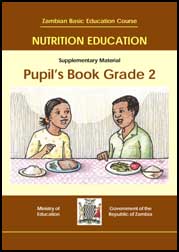
Zambian Basic Education Course, NUTRITION EDUCATION, Supplementary
Material - Pupil’s Book Grade 2
Mukelabai Songiso, Simon Hikaula, Janet L. Shamapango, Tomy B. Zulu
2005 86 pg ISBN: 9982540017 AF847/E
Download
 451 Kb
Chapter 5 DIARRHOEA
Lesson 1. Sick with diarrhoea
Lesson 2. What to do when you have diarrhoea
Lesson 3. Why do we get diarrhoea?
Lesson 4. How to avoid diarrhoea
Lesson 5. Diarrhoea in the family
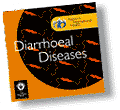 |
Diarrhoeal Diseases
Interactive Tutorial, Image Collection and Glossary CD-ROM The Diarrhoeal Diseases CD-ROM, one of 8 in the 'Topics in International Health' series created by The Wellcome Trust, provides an illustrated introduction to this important group of diseases, their causes, diagnosis, treatment, prevention and control. Three complementary resources are contained on this unique CD-ROM: a selection of interactive tutorials, an image collection, and a glossary. |
11 interactive tutorials highly visual, structured
learning tools
The tutorials include objectives, self assessment tests, a list of key
references to encourage further reading, and summary screens to reinforce
the crucial points.
Over 700 images a searchable database of high
quality images
Each image is accompanied by a detailed description, searchable
keywords, and disease and aetiological agent classifications. Sets of
images can be created, saved and printed. The image collection is a
valuable reference source which can be used to provide examples for
practical exercises and illustrations for lectures. It may be used on its
own or to enhance the teaching value of the tutorials.
Glossary
an electronic glossary of medical and scientific
terms
The glossary defines the medical and scientific terms used in the
tutorials and image descriptions. It has an easy to use interface, and
will help users who are unfamiliar with medical terminology or whose first
language is not English.
18 Subject experts have developed and reviewed this CD-ROM
to ensure that it is comprehensive, accurate, and up to date.
'Topics in
International Health'
is an excellent, exciting and unique series of educational materials for
medical and life sciences students, their teachers and other healthcare
professionals.
Aspects of international and tropical health are presented on a range of
CD-ROMs, each focusing on a disease (or group of diseases) of global
significance.
 |
eMedicine Specialties > Pediatrics > Gastroenterology > Diarrhea Instructions: You may earn continuing education credits by choosing any of the following:
|
eMedicine Membership
New to eMedicine?
Register now for FREE access to our membership services.
Registration takes about 2 minutes and entitles you to receive the
following:
Unlimited online access to the world’s most comprehensive clinical knowledge base
Full search capabilities for articles and multimedia
Choice of informative newsletters and Case Study emails
FREE interactive CME/CE
 |
How to Set Up and Manage a Resource Centre download pdf This manual is designed for health and disability workers planning to set up and develop a resource centre within resource-poor communities around the world, and is aimed toward people operating on a limited budget. Healthlink Worldwide uses this manual to support its workshops for organisations setting up resource centres in developing countries. - Publisher: Healthlink Worldwide |
| Public Health Information and Data: A Training
Manual Public Health Information and Data: A Training Manual supports instruction provided to members of the public health workforce on issues related to information access and management. This manual is intended primarily for librarians and others who may be responsible for developing training events. There are no copyright restrictions on the manual's contents, and instructors are free to adapt or duplicate any portion. The manual's chapters include: * Staying Informed About News in Public Health * Finding Information for Others: Health Education Resources * Finding Public Health Statistics and Data Sources * Supporting Decisions with Best Evidence Download the manual > pdf 3.5 mbOriginal document is here |
 |
Dr. R. K. Anand's
Guide to Child Care For pregnant mothers and parents of infants, young children, and teenagers. A definitive guide to the parent on pregnancy and childrearing from infancy to the teenage years. Authored by one of India's foremost paediatricians and an internationally renowned authority on breastfeeding. |

Epidemiology and Management of Diarrheal Diseases
for medical and health related students
Learning objectives
To identify the common agents causing diarrhea
To identify the population-at-risk of diarrhea
To understand the clinical features and laboratory methods for the
diagnosis of diarrhea
To know the management of diarrhea
To know the vaccines and other preventive measures for diarrhea
Performance Objectives
Diagnose the common causes of diarrhea
Assess and treat dehydration
Select antimicrobial agents appropriately for different types of diarrhea
Apply preventive strategies for the control of diarrhea
Epidemiology SuperCourse
This online course (set of lectures) is designed to provide an overview on
epidemiology and the Internet for medical and health related students
around the world.
Example topics included are: nutrition and global health, malaria, cancer
epidemiology, injury epidemiology, HIV/AIDS, pharmacoepidemiology,
influenza, diabetes,
diarrheal diseases, toxoplasma, and much more.
Click
here for a list of all the lectures.
 |
Source -
International Health and Disability database Subject and geographic search The Source collection is fully referenced on the Source bibliographic database, which can easily be searched. The database complements commercial databases by including a high proportion of materials that are not recorded on other databases. Details of resources include subjects, keywords, price, publisher and distributor. |
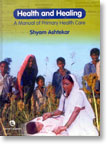 |
Health and Healing is for first contact or primary health care
workers. It is about both health and healing at the primary level.
It offers a broad and comprehensive range of health topics from
personal health to national health programmes, from system-wise
illnesses to health problems of at-risk groups like women,
children and old persons. By Dr. Shyam Ashtekar |

Search us and a community of over 350 leading global justice organisations
under one roof.
 |
Quest is a framework to guide the process of planning, researching, developing, disseminating and evaluating communication and information resources. It has been developed in recognition of the need for practical and comprehensive guidelines on how to produce effective resources. Quest aims to enhance the quality and impact of resources produced, and to develop related organisational capacity. Relevant to a wide audience, it is adaptable for use in different contexts. |
 |
Free - direct links to online journals offering full text articles The Free Medical Journals Site is dedicated to the promotion of free access to medical journals over the Internet. Within the next three years, the most important medical journals will be available online, free and in full-text. The access to free scientific knowledge will have a major impact on medical practice and attract Internet visitors to these journals. |
 |
Johns Hopkins Health Information You can get the full story on today's health news and much more on the InteliHealth Web page http://www.intelihealth.com InteliHealth, a joint venture between Aetna U.S. Healthcare and Johns Hopkins University and Health System, was established in 1996 to offer one of the most comprehensive and timely collections of health information from leading industry sources. Committed to providing the highest quality and most up-to-date health information, InteliHealth delivers content through both its in-house editorial staff and via licensing agreements with major broadcast, print and interactive media. To provide the highest standards of quality, the information on the InteliHealth site is reviewed and approved by Johns Hopkins, the nation's best hospital for eight consecutive years according to U.S. News and World Report. |
 Subscribe
to InteliHealth
Connect!
Subscribe
to InteliHealth
Connect!
Get Johns Hopkins FREE daily e-mail for
consumers or
professionals.
WaterWeb Ring
Rehydration Project is a member of WaterWeb ring, created in 1998 to
promote the sharing of information concerning water and the earth’s
environment. By connecting water-related web sites through the ring, the
WaterWeb consortium seeks to create a global community, bringing together
educational, governmental, nonprofit and commercial entities interested in
water research, conservation and management.

A Searchable Database of over 1,000 Internet resources useful to people
working in health, population, and international development.
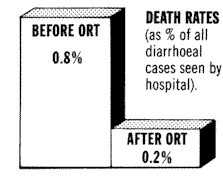
 Making ORT a household habit The Progress of Nations 1997 Water and Sanitation - Progress and Disparity In China, 85% of diarrhoeal episodes are treated with ORT. About three quarters of the households in developing countries now use ORT as defined before 1993, up from 38% in 1994. But only about one third of homes now use ORT following the new definition, a more effective treatment for diarrhoeal dehydration. |
|
| Loteria Nacional de Costa Rica Ministerio de Salud, Costa Rica Usted Puede Evitar el Colera: 1. Lavese bien las manos con jabon antes de comer y despues de usar el servicio sanitario 2. Lave bien los alimentos que ingiere, especialmente los que se comen crudos. 3. Tome siempre agua potable. Clore o hierva el algua de la que duda de su potabilidad. 4. Evite ingerir alimentos en la calle. |
 |
updated: 24 April, 2014