|
| |
Breastfeeding
 Ten Steps to Successful Breastfeeding «
web site + 10 step video series Babies who are breastfed are generally healthier and achieve optimal growth and development compared to those who are fed formula milk.
If the vast majority of babies were exclusively fed breastmilk in their
first six months of life – meaning only breastmilk and no other liquids or
solids, not even water – it is estimated that the lives of at least 1.2
million children would be saved every year. If children continue to be
breastfed up to two years and beyond, the health and development of millions
of children would be greatly improved.
more >> Ten Steps to Successful Breastfeeding «
web site + 10 step video series Babies who are breastfed are generally healthier and achieve optimal growth and development compared to those who are fed formula milk.
If the vast majority of babies were exclusively fed breastmilk in their
first six months of life – meaning only breastmilk and no other liquids or
solids, not even water – it is estimated that the lives of at least 1.2
million children would be saved every year. If children continue to be
breastfed up to two years and beyond, the health and development of millions
of children would be greatly improved.
more >>
World
Breastfeeding Week
1 to 7 August 2012
The
World Breastfeeding Week (WBW) is the greatest outreach vehicle for the
breastfeeding movement, being celebrated in over 170 countries. Officially
it is celebrated from 1–7 August. However, groups may choose other dates to
make it a more successful event in their countries. For more information on
the theme, exciting activities & materials for download, please visit the
World Breastfeeding Week website. |
|
Video |
10 Steps to Successful Breastfeeding |
Scientific Overview |
Recommendations & Vision |
Reviews
UNICEF, WHO and WABA along with the scientific community strongly
recommend initiating breastfeeding within half an hour of birth. Evidence
shows that early initiation can prevent 22% of all deaths among babies
below one month in developing countries. Every newborn, when placed
on the mother’s abdomen, has ability to find its mother’s breast all on
its own and to decide when to take the first breastfeed. This
is known as the ‘Breast Crawl’. [more] |
|
Breast Milk is best. Nothing that money can buy is as good for a baby as breastfeeding.
- Initiation of Breastfeeding within the first hour of life,
- Exclusive Breastfeeding for six months,
- Timely Complementary Feeding with appropriate foods, and
- Continued Breastfeeding for Two Years and beyond.
|
 Why Is Breastfeeding So Important? Why Is Breastfeeding So Important?
 Download .pdf 17.5 mb. Breastfeeding provides the perfect nutrition for your baby and provides many health benefits for both mother and baby. Download .pdf 17.5 mb. Breastfeeding provides the perfect nutrition for your baby and provides many health benefits for both mother and baby.
- Initiating breast feeding within the first hour and exclusive breastfeeding can prevent under two mortality.
- Breastfeeding: Exclusive breastfeeding
- Colostrum - Gift of a protective cover from the mother
- We believe all mothers know how to feed their child. But do they?
- Myths and facts about breast milk
- Complimentary feeding
- Role of media in promoting proper young child feeding: Media should focus on and promote measures that are required to be taken urgently to ensure the survival of children
|
|
Films for women in the community, community workers and health workers
Medical Aid Films (MAF - MedicalAidFilms.org) is a cutting edge film-making charity. We produce training films and animations for grassroots health workers in low income countries. Our films provide information and medical techniques on issues surrounding safe childbirth and infant health, with the aim of saving the lives of vulnerable women and children around the world. Approximately one woman a minute dies in childbirth. We hope that by using film and animation to train health workers, we can overcome literacy and language barriers that so often impede learning.
 Warning Signs in Pregnancy Warning Signs in Pregnancy
This film is aimed at community health workers, traditional birth attendants and women in the community. Its objective is to educate them about the warning signs in pregnancy that they should be aware of, and the checks they should carry out, so that skilled obstetric care can be sought out as soon ... Reconnaitre les signaux d'alerte durant la grossesse
Ce film s’adresse aux femmes, aux travailleurs communautaires en santé, aux sages-femmes traditionnelles et aux communautés en général. Il a pour but de leur enseigner les signaux d’alerte lors de la grossesse ainsi que les signes à rechercher, afin que les femmes enceintes qui les présentent reçoivent, au plus tôt, des soins obstétriques dispensés par du personnel qualifié.
 Neonatal Resuscitation - Skilled Health Worker Version Neonatal Resuscitation - Skilled Health Worker Version
This teaching film is aimed at skilled health workers equipped with a stethoscope and a bag and a mask. It teaches the essential steps to perform Neonatal Resuscitation, based on the Resuscitation Council UK's guidelines. © Medical Aid Films - 2011
 Understanding your body: How to plan a pregnancy Understanding your body: How to plan a pregnancy
This film is aimed at teenagers and young adults and presents the various methods available to plan a pregnancy. © Medical Aid Films - 2011
 Understanding your body: How babies are made Understanding your body: How babies are made
This is a film aimed at early teens and young adults. It describes what puberty is and how babies are made using a mixture of animation and expert advice as well as from vox-pop's from young men and women in Nairobi. © Medical Aid Films - 2011
 How to use the ultrasound probe How to use the ultrasound probe
This animation is part of MAF's Basic Obstetric Ultrasound Module. Films of this module are to be used when training midwives and clinical officers in basic obstetric ultrasound. MAF tested this film while training clinical officers and nurses in Mozambique. Very few people living in low resource areas
 Cervical cancer screening: visual inspection of the cervix using acetic acid (VIA) Cervical cancer screening: visual inspection of the cervix using acetic acid (VIA)
This is an animation showing a method of screening for cervical cancer in resource poor, developing countries. Test such as the pap smear require access to skilled health care and labs for testing samples and HPV (the virus responsible for most cervical cancers) testing kits remain expensive, yet VIA
 Ten steps to safe delivery Ten steps to safe delivery
This follows Neema a village birth attendant while she helps to deliver a baby in a rural setting where there is no access to trained health care workers. The 10 key steps for the audience to learn are then repeated at the end of the film to ensure that they are taking away the correct message.
 Management of PPH - Low resource setting Management of PPH - Low resource setting
This animation is aimed at women and TBAs. It teaches how to prevent and manage PPH in settings where skilled obstetric care can be reached within a reasonable period of time (less than four hours). It includes the use of Misoprostol. © Medical Aid Films - 2011
 Management of PPH - No resource setting Management of PPH - No resource setting
Primary Post-partum Haemorrhage (PPH) is one of the major causes of maternal death in the developing world. This animation is aimed at women and TBAs. It teaches how to prevent and manage PPH in settings where it would take the woman more than 4 hours to reach skilled obstetric care. It demonstrates
 Food for Life: What Pregnant Women Need to Eat Ce que doivent manger les femmes enceintes Food for Life: What Pregnant Women Need to Eat Ce que doivent manger les femmes enceintes
Ce film s’adresse aux femmes, aux travailleurs en santé et aux communautés en général.
Il leur enseigne les bases de l’alimentation que doit consommer une femme enceinte ainsi que les complications qu’une alimentation saine permet d’éviter. Il présente les quatre groupes d’aliments (les aliments de base, les aliments pour bouger, les aliments pour grandir et les aliments bonne mine) et détaille leurs bienfaits.
 Food for life: What and when to feed you child? Quand et comment nourrir votre enfant - 6 à 24 mois Food for life: What and when to feed you child? Quand et comment nourrir votre enfant - 6 à 24 mois
Ce film s’adresse aux femmes, aux travailleurs en santé et aux communautés en général.
Il leur enseigne les bases de l’alimentation d’un enfant entre les âges de 6 mois et deux ans. Il présente les quatre grandes catégories d’aliments (les aliments de base, les aliments pour bouger, les aliments pour grandir et les aliments pour avoir bonne mine) et détaille leurs bienfaits.
 Food for life: Breastfeeding Allaitement maternel - 0 à 6 mois Food for life: Breastfeeding Allaitement maternel - 0 à 6 mois
Ce film s’adresse aux mères, aux travailleurs en santé et aux communautés en général.
Il leur enseigne pourquoi et comment allaiter un nourrisson de la naissance à l’âge de 6 mois. Il explique les avantages du lait maternel sur le lait artificiel, rappelle qu’il ne faut donner ni eau, ni tisane ni alimentation complémentaire aux bébés avant l’âge de 6 mois et démontre comment allaiter.
|
|
Breastfeeding and the risk for diarrhea morbidity and mortality
Lamberti LM, Fischer Walker CL, Noiman A, Victora C, Black RE. BMC Public Health. 2011 Apr 13;11 Suppl 3:S15. Review.
download pdf12 pages - 566 kb Background: Lack of exclusive breastfeeding among infants 0-5 months of age
and no breastfeeding among children 6-23 months of age are associated with
increased diarrhea morbidity and mortality in developing countries. We
estimate the protective effects conferred by varying levels of breastfeeding
exposure against diarrhea incidence, diarrhea prevalence, diarrhea
mortality, all-cause mortality, and hospitalization for diarrhea illness. Methods: We systematically reviewed all literature published from 1980 to
2009 assessing levels of suboptimal breastfeeding as a risk factor for
selected diarrhea morbidity and mortality outcomes. We conducted random
effects meta-analyses to generate pooled relative risks by outcome and age category. Results: We found a large body of evidence for the protective effects of
breastfeeding against diarrhea incidence, prevalence, hospitalizations,
diarrhea mortality, and all-cause mortality. The results of random effects
meta-analyses of eighteen included studies indicated varying degrees of
protection across levels of breastfeeding exposure with the greatest
protection conferred by exclusive breastfeeding among infants 0-5 months of
age and by any breastfeeding among infants and young children 6-23 months of
age. Specifically, not breastfeeding resulted in an excess risk of diarrhea
mortality in comparison to exclusive breastfeeding among infants 0-5 months
of age (RR: 10.52) and to any breastfeeding among children aged 6-23 months (RR: 2.18). Conclusions: Our findings support the current WHO recommendation for
exclusive breastfeeding during the first 6 months of life as a key child
survival intervention. Our findings also highlight the importance of
breastfeeding to protect against diarrhea-specific morbidity and mortality
throughout the first 2 years of life. |
 |
 |
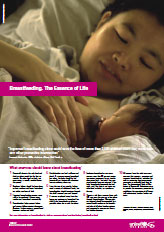 |
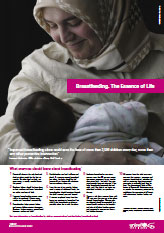
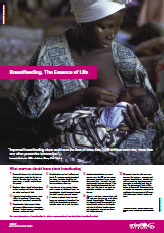
Posters: Breastfeeding. The Essence of Life 438 kb
What everyone should know about breastfeeding* “Improved breastfeeding alone could save the lives of more than 3,500 children every day, more than any other preventive intervention” Innocenti Declaration 2005 on Infant and Young Child Feeding © UNICEF
* Based on Facts for Life, published by UNICEF, WHO, UNESCO, UNFPA, UNDP, UNAIDS, WFP and the World Bank |
|
|
 The New Revised 3rd Edition of Wellstart’s Lactation Management Self-Study Modules, Level 1.
 150 pages 4.8 mb 150 pages 4.8 mb
This educational tool is downloadable without charge.
Visitors are invited but not required to help this tool to continue to be available by
donating any amount they wish to
Wellstart International, a US based 501(c) (3) non-profit organization that is compliant with the International Code of Marketing of Breastmilk Substitutes.
Users are also requested to send your name, professional school that you are affiliated with and an e-mail address to
[email protected] so that we may send you updates and alerts about relevant new materials and references.
|
Breastfeeding - the first 6 months of life
Increasing optimal breastfeeding practices could save an estimated 1.5
million infant lives annually. Up to 55 percent of infant deaths from
diarrheal disease and acute respiratory infections may result from
inappropriate feeding practices. Optimal feeding for sustained child
health and growth includes initiation of breastfeeding within the first
hour of life, exclusive breastfeeding for six months, timely complementary
feeding with appropriate foods, and continued breastfeeding for two years
and beyond.
During the first 6 months of life, infants should be exclusively
breastfed. This means that the healthy baby should receive breastmilk and no other
fluids, such as water, teas, juice, cereal drinks, animal milk or formula. Exclusively
breastfed babies are much less likely to get diarrhoea or to die from it than are babies
who are not breastfed or are partially breastfed. Breastfeeding also protects against the
risk of allergy early in life, aids in child spacing and provides protection against
infections other than diarrhoea (e.g. pneumonia). Breastfeeding should be continued until
at least 2 years of age. The best way to establish the practice is to put the baby to the
breast immediately after birth and not to give any other fluids. Advantages and Benefits of breastfeeding are listed below. Some or all of them
may be explained to mothers using simple language. If breastfeeding is not possible, cow's milk or milk formula should be
given from a cup. This is possible even with very young infants. Feeding bottles and teats
should never be used because they are very difficult to clean and easily carry the
organisms that cause diarrhoea. Careful instructions should be given on the correct
preparation of milk formula using water that has been boiled briefly before use. |
|
Advantages and Benefits of Breastfeeding
- Saves Lives. Currently there are 9 million infant deaths a year.
Breastfeeding saves an estimated 6 million additional deaths from infectious
disease alone.
- Provides Initial Immunization. Breastmilk, especially the first milk (colostrum),
contains anti-bacterial and anti-viral agents that protect the infant
against disease, especially diarrhoea. These are not present in animal milk or formula. Breastmilk also aids the development of the infant's own
immune system.
- Prevents Diarrhoea / Diarrhea. Diarrhoea is the leading cause of death among infants in
developing countries. Infants under two months of age who are not breastfed
are 25 times as likely to die of diarrhea than infants exclusively
breastfed. Continued breastfeeding during diarrhea reduces dehydration,
severity, duration, and negative nutritional consequences of diarrhea.
- Provides Complete and Perfect Nutrition. Breastmilk is a perfect food that cannot be
duplicated. It is more easily digested than any substitute, and it actually
alters in composition to meet the changing nutritional needs of the growing
infant. It provides all the nutrients and
water needed by a healthy infant during the first 6 months of life. Formula or cow's milk may be too dilute (which reduces
its nutritional value) or too concentrated (so that it does not provide
enough water), and the proportions of different nutrients are not ideal.
- Maximizes a Child's Physical and Intellectual Potential. Malnutrition
among infants up to six months of age can be virtually eradicated by the
practice of exclusive breastfeeding. For young children beyond six months,
breastmilk serves as the nutritional foundation to promote continued
healthful growth. Premature infants fed breastmilk show higher developmental
scores as toddlers and higher IQs as children than those not fed breastmilk.
- Promotes the Recovery of the Sick Child. Breastfeeding provides a
nutritious, easily digestible food when a sick child loses appetite for
other foods. When a child is ill or has diarrhea, breastfeeding helps
prevent dehydration. Frequent breastfeeding also diminishes the risk of
malnutrition and fosters catch-up growth following illness.
- Supports Food Security. Breastmilk provides total food security for an
infant's first six months. It maximizes food resources, both because it is
naturally renewing, and because food that would otherwise be fed to an
infant can be given to others. A mother's milk supply adjusts to demand;
only extremely malnourished mothers have a reduced capacity to breastfeed.
- Bonds Mother and Child. Breastfeeding immediately after delivery encourages the
"bonding" of the mother to her infant, which has important emotional benefits
for both and helps to secure the child's place within the family. Breastfeeding provides physiological and
psychological benefits for both mother and child. It creates emotional
bonds, and has been known to reduce rates of infant abandonment.
- Helps Birth Spacing. In developing countries, exclusive breastfeeding
reduces total potential fertility as much as all other modern contraceptive
methods combined. Mothers who breastfeed usually
have a longer period of infertility after giving birth than do mothers who
do not breastfeed.
- Benefits Maternal Health. Breastfeeding reduces the mother's risk of
fatal postpartum hemorrhage, the risk of breast and ovarian cancer, and of
anemia. By spacing births, breastfeeding allows the mother to recuperate
before she conceives again.
- Saves Money. Breastfeeding is among the most cost-effective of child
survival interventions. Households save money; and institutions economize by
reducing the need for bottles and formulas. By shortening mothers' hospital
stay, nations save foreign exchange. There are none of the expenses associated with
feeding breastmilk substitutes (e.g. the costs of fuel, utensils, and special formulas,
and of the mother's time in formula preparation).
- Is Environment-friendly. Breastfeeding does not waste scarce resources
or create pollution. Breastmilk is a naturally-renewable resource that
requires no packaging, shipping, or disposal.
- Breastfeeding is Clean. It does not require the
use of bottles, nipples, water and formula which are easily contaminated with bacteria
that can cause diarrhoea.
- Milk intolerance is very rare in infants who take only breastmilk.
|
BREASTFEEDING
Best for baby
Reduces incidence of
allergies
Economical - no waste
Antibodies - greater immunity to
infections
Stool inoffensive - never constipated
Temperature always correct and constant
Fresh milk - never goes sour in the
breast
Emotionally bonding
Easy once established
Digested easily within two to three
hours
Immediately available
Nutritionally balanced
Gastroenteritis greatly reduced
From a publicity leaflet by the TIBS support group, Trinidad.
|
|
Weaning a Critical Time for Diarrhoea Transmission Infants are at greatest risk of diarrhoea when foods other than
breastmilk are first given. This is because during weaning infants are being
exposed to food-borne germs for the first time and they are losing the
protection of breastmilk which has anti-infective properties. High levels of contamination are often found in animal milks and
traditional weaning foods, especially cereal gruels. Escherichia coli,
which causes at least 25 per cent of all diarrhoea in developing countries, is
commonly found in weaning food. Feeding bottles and rubber teats, which are particularly difficult to clean,
are often breeding grounds for germs. The need for infants older than 6 months to receive more than just
breastmilk in order to grow well, balanced against the risk that this will
result in diarrhoea, has been called 'the weaning dilemma'. It is important for health workers to work with local communities to
identify and encourage safe weaning practices and to improve infants' nutrition to
increase their resistance to infections such as diarrhoea. Improved weaning practices
Complementary foods should normally be started when a child is 6
months old. These may be started any time after 6 months of age, however, if the child is
not growing satisfactorily. Good weaning practices involve selecting nutritious foods and
using hygienic practices when preparing them. The choice of complementary foods will depend on local patterns of diet
and agriculture, as well as on existing beliefs and practices. In addition to breastmilk
(or animal milk), soft mashed foods (e.g. cereals) should be given, to which some
vegetable oil (510 ml/serving) has been added. Other foods, such as well cooked pulses and vegetables, should be given as the
diet is expanded. When possible, eggs, meat, fish and fruit should be also
given.
|
Breastfeeding
From Wikipedia, the free encyclopedia


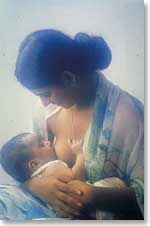
An infant breastfeeding
International Breastfeeding Symbol
- Sucking and nursing are synonyms. For other
uses, see
Nursing (disambiguation)
Breastfeeding (or nursing[1])
is the feeding of an
infant or young
child
with
breast milk directly from human
breasts rather than from a
baby bottle or other container. Babies have a
sucking reflex that enables them to suck and swallow milk.
Most mothers can breastfeed for six months or more, without the
addition of
infant formula or solid food.
Human
breast milk is the most healthful form of milk for human
babies.[2]
There are few
exceptions, such as when the mother is taking certain
drugs
or is infected with
tuberculosis or
HIV.
Breastfeeding promotes health, helps to prevent disease and
reduces health care and feeding costs.[3]
In both
developing and
developed countries, artificial feeding is associated with
more deaths from
diarrhoea in infants.[4]Experts
agree that breastfeeding is beneficial, but may disagree about
the length of breastfeeding that is most beneficial, and about
the risks of using artificial formulas.[5][6][7]
Both the
World Health Organization (WHO) and the
American Academy of Pediatrics (AAP) recommend exclusive
breastfeeding for the first six months of life and then
breastfeeding up to two years or more (WHO) or at least one year
of breastfeeding in total (AAP). Exclusive breastfeeding for the
first six months of life "provides continuing protection against
diarrhea and respiratory tract infection" that is more common in
babies fed formula.
[8] The WHO[9]
and AAP[10]
both stress the value of breastfeeding for mothers and children.
While recognizing the superiority of breastfeeding, regulating
authorities also work to minimize the risks of artificial
feeding.[6]
According to a WHO 2001 report,[11]
alternatives to breastfeeding include:
The acceptability of
Breastfeeding in public varies by culture and country. In
Western culture, though most approve of breastfeeding, some
mothers may be reluctant to do so out of fear of public opinion.
Lactation
The production, secretion and ejection of milk is called
lactation. It is one of the defining features of being a
mammal.
Breast milk
Not all the properties of
breast milk are understood, but its
nutrient content is relatively stable. Breast milk is made
from nutrients in the mother's bloodstream and bodily stores.
Because breastfeeding uses an average of 500 calories a day it
helps the mother lose weight after giving birth.[12]
The composition of breast milk changes depending on how long the
baby nurses at each session, as well as on the age of the child.
Research shows that the milk and energy content of breastmilk
actually decreases after the first year.[9]
Breastmilk adapts to a toddler's developing system, providing
exactly the right amount of nutrition at exactly the right time.[10]]
In fact, research shows that between the ages of 12 and 24
months, 448 milliliters of human milk provide these percentages
of the following minimum daily requirements:[13]
| Energy: |
29% |
| Folate: |
76%% |
| Protein: |
43% |
| Vitamin B12: |
94% |
| Calcium: |
36% |
| Vitamin C: |
60% |
| Vitamin A: |
75% |
The quality of a mother's breast milk may be compromised by
stress, bad food habits, chronic illnesses, smoking, and
drinking.[14][unreliable
source?][15]
Benefits for the infant


Himba woman and child.
A woman with her child in
Kabala,
Sierra Leone in the 1960's.
During breastfeeding
nutrients and
antibodies pass to the baby[16]
while it helps to strengthen the
maternal bond.[17]
Research has found many benefits to breastfeeding.
[18] These include:
Superior nutrition
Breast milk has just the right amount of fat, sugar, water,
and protein that is needed for a baby's growth and development.[17]
Greater immune health
Breast milk contains several anti-infective
factors such as
bile salt stimulated lipase (protecting against
amoebic infections),
lactoferrin (which binds to iron and inhibits the growth of
intestinal bacteria)[19][20]
and
immunoglobulin A protecting against
microorganisms.[21]
As breastfeeding can transmit
HIV
from mother to child, UNAIDS recommends avoidance of all
breastfeeding where formula feeding is acceptable, feasible,
affordable and safe.[22]
The qualifications are important. Some constituents of breast
milk may protect from infection. High levels of certain
polyunsaturated fatty acids in breast milk (including
eicosadienoic,
arachidonic and
gamma-Linolenic acids) are associated with a reduced risk of
child infection when nursed by HIV-positive mothers. Arachidonic
acid and gamma-linolenic acid may also reduce
viral shedding of the HIV virus in Breast milk.[23]
Due to this, in underdeveloped nations infant mortality rates
are lower when HIV-positive mothers breastfeed their newborns
than when they use infant formula. However, differences in
infant mortality rates have not been reported in better
resourced areas.[24]
Treating infants prophylactically with Lamivudine can help to
decrease the transmission of HIV through mother to child.
[25]
Higher intelligence
Two initial studies suggest babies with a specific version of
the
FADS2 gene demonstrated an
IQ averaging 7 points higher if breastfed, compared with
babies with a less common version of the gene who showed no
improvement when breastfed. FADS2 affects the metabolism of
fatty acids, such as
DHA and
AA, which are known to be linked to early brain development.
Manufacturers of infant formula have been adding DHA and AA
fatty acids to their products since this discovery over a decade
ago. The researchers state, "further investigation to replicate
and explain this specific gene–environment interaction is
warranted," and have concluded, "Our findings support the idea
that the nutritional content of breast milk accounts for the
differences seen in human IQ. But it's not a simple all-or-none
connection: it depends to some extent on the genetic makeup of
each infant."[26]
Horwood, Darlow and Mogridge tested the
intelligence quotient scores of low
birthweight children at seven or eight years of age. Those
who were breastfed for more than eight months had significantly
higher intelligence quotient scores than comparable children
breastfed for less time. They concluded, "These findings add to
a growing body of evidence to suggest that breast milk feeding
may have small long term benefits for child cognitive
development."
[27]
Long term health effects
Infants exclusively breastfed have less chance of developing
diabetes mellitus type 1 than peers with a shorter duration
of breastfeeding and an earlier exposure to cow milk and solid
foods.[28]
Breastfeeding also appears to protect against
diabetes mellitus type 2,[29][30]
at least in part due to its effects on the child's weight.[30]
Breastfeeding appears to reduce the risk of extreme
obesity in children aged 39 to 42 months.[31]
The protective effect of breastfeeding against obesity is
consistent, though small, across many studies, and appears to
increase with the duration of breastfeeding.[32]
In one study, breastfeeding did not appear to offer
protection against
allergies.[dubious
–
discuss][33]
However, another study showed breastfeeding to have lowered the
risk of
asthma, protect against allergies[dubious
–
discuss], and provide improved
protection for babies against respiratory and intestinal
infections.[34]
A review of the association between breastfeeding and
celiac disease (CD) concluded that breast feeding while
introducing
gluten to the diet reduced the risk of CD. The study was
unable to determine if breastfeeding merely delayed symptoms or
offered life-long protection.[35]
A study at the University of Wisconsin found that women who
were breast fed in infancy may have a lower risk of developing
breast cancer than those who were not breast fed.
[36][unreliable
source?]
Fewer urinary tract, diarrheal and
middle ear infections
Breastfeeding reduced the risk of acquiring
urinary tract infections in infants up to seven months
of age. The protection was strongest immediately after
birth, but was ineffective past seven months[37]
Breastfeeding appears to reduce symptoms of
upper respiratory tract infections in premature infants up
to seven months after release from hospital.[38]
A longer period of breastfeeding is associated with a shorter
duration of some middle ear infections (otitis
media with effusion, OME) in the first two years of life.
The researches concluded, "For a decrease in the amount of time
with OME during the first 2 years of life, prolonged
breast-feeding and upright feeding position should be
encouraged, and cigarette smoke exposure should be minimized.
Limiting early child care in large groups might also be
advisable.".[39]
Another study found that breastfed babies had half the incidence
of diarrheal illness, 19% fewer cases of any
otitis media infection and 80% fewer prolonged cases of
otitis media than formula fed babies in the first twelve months
of life.[40]
Less tendency to develop allergic
diseases (atopy)
In children who are at risk for developing allergic diseases
(defined as at least one parent or sibling having
atopy),
atopic syndrome can be prevented or delayed through exclusive
breastfeeding for four months, though these benefits may not be
present after four months of age.
[41] However, the key factor may be the age at which
non-breastmilk is introduced rather than duration of
breastfeeding.[42]
Atopic dermatitis, the most common form of
eczema, can be reduced through exclusive breastfeeding
beyond 12 weeks in individuals with a family history of atopy,
but when breastfeeding beyond 12 weeks is combined with other
foods incidents of eczema rise irrespective of family history.[43]
Less necrotizing enterocolitis in
premature infants
Necrotizing enterocolitis (NEC), is an acute inflammatory
disease in the intestines of infants. Necrosis or death of
intestinal tissue may follow. It is mainly found in
premature births. In one study of 926 preterm infants, NEC
developed in 51 infants (5.5%). The death rate from necrotizing
enterocolitis was 26%. NEC was found to be six to ten times more
common in infants fed formula exclusively, and three times more
common in infants fed a mixture of breast milk and formula,
compared with exclusive breastfeeding. In infants born at more
than 30 weeks, NC was twenty times more common in infants fed
exclusively on formula.[44]
More easily aroused from sleep
Breastfed babies have better arousal from sleep at 2–3
months. This coincides with the peak incidence of
sudden infant death syndrome.[45]
Benefits for mothers
Breastfeeding is a cost effective way of feeding an infant,
and provides the best nourishment for a child at a small
nutrient cost to the mother. Frequent and exclusive
breastfeeding can delay the return of fertility through
lactational amenorrhea, though breastfeeding is an imperfect
means of
birth control. During breastfeeding beneficial
hormones are released into the mother's body.[16]
and the maternal bond can be strengthened.[17]
Breastfeeding is possible throughout
pregnancy, but generally milk production will be reduced at
some point.[46]
Long-term health effects
A recent study indicates long duration of lactation (at least
24 months) is associated with a reduced risk of heart disease in
women.[47]
Breastfeeding mothers also have less risk of
endometrial,[48][49]
and
ovarian cancer,[17][10]
and
osteoporosis,[17][10]
and breast cancer.
Mothers who breastfeed longer than eight months also benefit
from bone re-mineralisation[50]
and breastfeeding
diabetic mothers require less insulin.[51]
Breastfeeding helps stabilize maternal
endometriosis,[10]
reduces the risk of post-partum
bleeding[52]
and benefits the
insulin levels for mothers with
polycystic ovary syndrome.[53]
Women who breast feed for longer have less chance of getting
rheumatoid arthritis, a Malmo University study published online
ahead of print in the Annals of the Rheumatic Diseases suggested
(See
Women Who Breast Feed for More than a Year Halve Their Risk of
Rheumatoid Arthritis). The study also found that taking oral
contraceptives, which are suspected to protect against the
disease because they contain hormones that are raised in
pregnancy, did not have the same effect. Simply having children
but not breast feeding also did not seem to be protective.
Bonding
The hormones released during breastfeeding strengthen the
maternal bond. Teaching partners how to manage common
difficulties is associated with higher breastfeeding rates.[54]
Support for a mother while breastfeeding can assist in
familial bonds and help build a
paternal bond between father and child.[55]
If the mother is away, an alternative caregiver may be able
to feed the baby with expressed breast milk. The various
breast pumps available for sale and rent help working
mothers to feed their babies breast milk for as long as they
want. To be successful, the mother must produce and store enough
milk to feed the child for the time she is away, and the feeding
caregiver must be comfortable in handling breast milk.
Hormone release
Breastfeeding releases
oxytocin and
prolactin, hormones that relax the mother and make her feel
more nurturing toward her baby.[56]
Breastfeeding soon after giving birth increases the mother's
oxytocin levels, making her uterus contract more quickly and
reducing bleeding. Oxytocin is similar to pitocin, a synthetic
hormone used to make the uterus contract.[52]
Weight loss
As the fat accumulated during pregnancy is used to produce
milk, extended breastfeeding—at least 6 months—can help mothers
lose weight.[57]
However, weight loss is highly variable among lactating women,
and diet and exercise are more reliable ways of losing weight.[58]
Natural postpartum infertility
A breastfeeding woman may not
ovulate, or have regular periods, during the entire
lactation period. The period in which ovulation is absent
differs for each woman. This
Lactational amenorrhea has been used as an imperfect form of
natural contraception, with a greater than 98% effectiveness
during the first six months after birth if specific nursing
behaviors are followed.[59]
It is possible for some women to ovulate within two months after
birth while fully breastfeeding.
Organisational endorsements
World Health Organization
|
“ |
[the] vast
majority of mothers can and should breastfeed, just as
vast majority of infants can and should be breastfed.
Only under exceptional circumstances can a mother's milk
be considered as unsuitable for her infant. For those
few health situations where infants cannot, or should
not, be breastfed, the choice of the best alternative -
expressed milk from the infant's own mother, breast milk
from a healthy wet-nurse or a human-milk bank, or a
breast milk substitute fed with a cup, which is a safer
method than a feeding bottle or a teat - depends on
individual circumstances.
[60] |
” |
The WHO recommends at least two years of breastfeeding and
exclusive breastfeeding for the first six months of life.
Breastfeeding should continue after two years of life as long as
mutually desired by mother and child.
American Academy of Pediatrics
|
“ |
Extensive
research, especially in recent years, documents diverse
and compelling advantages to infants, mothers, families,
and society from breastfeeding and the use of human milk
for infant feeding. These include health, nutritional,
immunologic, developmental, psychological, social,
economic, and environmental benefits.[10] |
” |
AAP recommends at least one year of breastfeeding and
exclusive breastfeeding for the first six months of life.
Breastfeeding should continue after two years of life as long as
mutually desired by mother and child.
Breastfeeding difficulties
While breastfeeding is a natural human activity, difficulties
are not uncommon. Putting the baby to the breast as soon as
possible after the birth helps to avoid many problems. The AAP
breastfeeding policy says: Delay weighing, measuring,
bathing, needle-sticks, and eye prophylaxis until after the
first feeding is completed.[10]
Many breastfeeding difficulties can be resolved with proper
hospital procedures, properly trained midwives, doctors and
hospital staff, and lactation consultants.[61]
There are some situations in which breastfeeding may be harmful
to the infant, including infection with
HIV
and acute poisoning by environmental contaminants such as lead.[34]
Rarely, a mother may not be able to produce breastmilk because
of a prolactin deficiency. This may be caused by Sheehan's
syndrome, an uncommon result of a sudden drop in blood pressure
during childbirth typically due to hemorrhaging. In developed
countries, many working mothers do not breast feed their
children due to work pressures. For example, a mother may need
to schedule for frequent pumping breaks, and find a clean,
private and quiet place at work for pumping. These
inconveniences may cause mothers to give up on breast feeding
and use infant formula instead.
Infant weight gain
Breastfed infants generally gain weight according to the
following guidelines:
- 0–4 months: 170 grams per week†
- 4–6 months: 113–142 grams per week
- 6–12 months: 57–113 grams per week
- † It is acceptable for some babies to gain
113–142 grams (4–5 ounces) per week. This average is taken
from the lowest weight, not the birth weight.
The average breastfed baby doubles its birth weight in 5–6
months. By one year, a typical breastfed baby will weigh about
2½ times its birth weight. At one year, breastfed babies tend to
be leaner than bottle fed babies.[62]
By two years, differences in weight gain and growth between
breastfed and formula-fed babies are no longer evident.[63];
Methods and considerations
There are many books and videos to advise mothers about
breastfeeding.
Lactation consultants in hospitals or private practice, and
volunteer organisations of breastfeeding mothers such as
La Leche League also provide advice and support.
Early breastfeeding
In the half hour after birth, the baby's suckling reflex is
strongest, and the baby is more alert, so it is the ideal time
to start breastfeeding[64].
Early breast-feeding is associated with fewer nighttime feeding
problems
[65]
Time and place for breastfeeding
Breastfeeding at least every two to three hours helps to
maintain milk production. For most women, eight breastfeeding or
pumping sessions every 24 hours keeps their milk production
high.[10]
Newborn babies may feed more often than this: 10 to 12
breastfeeding sessions every 24 hours is common, and some may
even feed 18 times a day.[66]
Feeding a baby "on demand" (sometimes referred to as "on cue"),
means feeding when the baby shows signs of
hunger; feeding this way rather than by the clock helps to
maintain milk production and ensure the baby's needs for milk
and comfort are being met.[9]
However, it may be important to recognize whether a baby is
truly hungry, as breastfeeding too frequently may mean the child
receives a disproportionately high amount of foremilk, and not
enough hindmilk.[67].
"Experienced breastfeeding mothers learn that the sucking
patterns and needs of babies vary. While some infants' sucking
needs are met primarily during feedings, other babies may need
additional sucking at the breast soon after a feeding even
though they are not really hungry. Babies may also nurse when
they are lonely, frightened or in pain.[3]"
"Comforting and meeting sucking needs at the breast is
nature's original design. Pacifiers (dummies, soothers) are a
substitute for the mother when she can't be available. Other
reasons to pacify a baby primarily at the breast include
superior oral-facial development, prolonged lactational
amenorrhea, avoidance of nipple confusion and stimulation of an
adequate milk supply to ensure higher rates of breastfeeding
success.[4]"
Most US states now have laws that allow a mother to
breastfeed her baby anywhere she is allowed to be. In hospitals,
rooming-in care permits the baby to stay with the mother and
improves the ease of breastfeeding. Some commercial
establishments provide breastfeeding rooms, although laws
generally specify that mothers may breastfeed anywhere, without
requiring them to go to a special area.
Latching on, feeding and positioning
Correct positioning and technique for latching on can prevent
nipple soreness and allow the baby to obtain enough milk.
[68] The "rooting reflex" is the baby's natural
tendency to turn towards the breast with the mouth open wide;
mothers sometimes make use of this by gently stroking the baby's
cheek or lips with their nipple in order to induce the baby to
move into position for a breastfeeding session, then quickly
moving baby onto the breast while baby's mouth is wide open.
[69] In order to prevent nipple soreness and allow the
baby to get enough milk, a large part of the breast and areola
need to enter the baby's mouth.[68][70]
To help the baby
latch on well, tickle the baby's top lip with the nipple,
wait until the baby's mouth opens wide, then bring the baby up
towards the nipple quickly, so that the baby has a mouthful of
nipple and
areola. The nipple should be at the back of the baby's
throat, with the baby's tongue lying flat in its mouth.
Inverted or flat nipples can be massaged so that the baby
will have more to latch onto. Resist the temptation to move
towards the baby, as this can lead to poor attachment.
Pain in the nipple or breast is linked to incorrect
breastfeeding techniques. Failure to latch on is one of the main
reasons for ineffective feeding and can lead to infant health
concerns. A 2006 study found that inadequate parental education,
incorrect breastfeeding techniques, or both were associated with
higher rates of preventable hospital admissions in newborns.[71]
The baby may pull away from the nipple after a few minutes or
after a much longer period of time. Normal feeds at the breast
can last a few sucks (newborns), from 10 to 20 minutes or even
longer (on demand). Sometimes, after the finishing of a breast,
the mother may offer the other breast.
While most women breastfeed their child in the
cradling position, there are many ways to hold the feeding
baby. It depends on the mother and child's comfort and the
feeding preference of the baby. Some babies prefer one breast to
the other, but the mother should offer both breasts at every
nursing with her newborn.
When tandem breastfeeding, the mother is unable to move the
baby from one breast to another and comfort can be more of an
issue. As tandem breastfeeding brings extra strain to the arms,
especially as the babies grow, many mothers of twins recommend
the use of more supporting pillows.
Exclusive breastfeeding

Two 25ml samples of human breast milk. The left hand
sample is foremilk, the watery milk coming from a
full breast. The right hand sample is hindmilk, the
creamy milk coming from a nearly empty breast.
[72]
Exclusive breastfeeding is when an infant receives no other
food or drink besides breast milk.[9]
National and international guidelines recommend that all infants
be breastfed exclusively for the first six months of life.
Breastfeeding may continue with the addition of appropriate
foods, for two years or more. Exclusive breastfeeding has
dramatically reduced infant deaths in developing countries by
reducing
diarrhea and
infectious diseases. It has also been shown to reduce HIV
transmission from mother to child, compared to mixed feeding.
Exclusively breastfed infants feed anywhere from 6 to 14
times a day. Newborns consume from 30 to 90 ml (1 to 3 US fluid
ounces). After the age of four weeks, babies consume about 120ml
(4 US fluid ounces) per feed. Each baby is different, but as it
grows the amount will increase. It is important to recognize the
baby's hunger signs. It is assumed that the baby knows how much
milk it needs and it is therefore advised that the baby should
dictate the number, frequency, and length of each feed. The
supply of milk from the breast is determined by the number and
length of these feeds or the amount of milk expressed. The
birth weight of the baby may affect its feeding habits, and
mothers may be influenced by what they perceive its requirements
to be. For example, a baby born small for gestational age may
lead a mother to believe that her child needs to feed more than
if it larger; they should, however, go by the demands of the
baby rather than what they feel is necessary.
While it can be hard to measure how much food a breastfed
baby consumes, babies normally feed to meet their own
requirements.[73]
Babies that fail to eat enough may exhibit symptoms of
failure to thrive. If necessary, it is possible to estimate
feeding from wet and soiled nappies (diapers): 8 wet cloth or
5–6 wet disposable, and 2–5 soiled per 24 hours suggests an
acceptable amount of input for newborns older than 5–6 days old.
After 2–3 months, stool frequency is a less accurate measure of
adequate input as some normal infants may go up to 10 days
between stools. Babies can also be weighed before and after
feeds.
Expressing breast milk
When direct breastfeeding is not possible, a mother can
express (artificially remove and store) her milk. With
manual massage or using a
breast pump, a woman can express her milk and keep it in
freezer storage bags, a
supplemental nursing system, or a
bottle ready for use. Breast milk may be kept at
room temperature for up to ten hours, refrigerated for up to
eight days or frozen for up to four to six months. Research
suggests that the antioxidant activity in expressed breast milk
decreases over time but it still remains at higher levels than
in infant formula.[74]
Expressing breast milk can maintain a mother's milk supply
when she and her child are apart. If a sick baby is unable to
feed, expressed milk can be fed through a
nasogastric tube.
Expressed milk can also be used when a mother is having
trouble breastfeeding, such as when a newborn causes grazing and
bruising. If an older baby bites the nipple, the mother's
reaction - a jump and a cry of pain - is usually enough to
discourage the child from biting again.
"Exclusively Expressing", "Exclusively pumping" and "EPing"
are terms for a mother who feeds her baby exclusively on her
breastmilk while not physically breastfeeding. This may arise
because her baby is unable or unwilling to latch on to the
breast. With good pumping habits, particularly in the first 12
weeks when the milk supply is being established, it is possible
to produce enough milk to feed the baby for as long as the
mother wishes. Kellymom
[5] has a page of links relating to exclusive pumping.
It is generally advised to delay using a bottle to feed
expressed breast milk until the baby is 4–6 weeks old and is
good at sucking directly from the breast.[75]
As sucking from a bottle takes less effort, babies can lose
their desire to suck from the breast. This is called nursing
strike or nipple confusion. To avoid this when
feeding expressed breast milk (EBM) before 4–6 weeks of age, it
is recommended that breast milk be given by other means such as
feeding spoons or feeding cups. Also, EBM should be given by
someone other than the breastfeeding mother (or wet nurse), so
that the baby can learn to associate direct feeding with the
mother (or wet nurse) and associate bottle feeding with other
people.[citation
needed]
Some women donate their expressed breast milk (EBM) to
others, either directly or through a
milk bank. Though historically the use of
wet nurses was common, some women dislike the idea of
feeding their own child with another woman's milk; others
appreciate being able to give their baby the benefits of breast
milk. Feeding expressed breast milk—either from donors or the
baby's own mother—is the feeding method of choice for premature
babies.[76]
The transmission of some
viral diseases through breastfeeding can be prevented by
expressing breast milk and subjecting it to Holder
pasteurisation.[77]
Mixed feeding
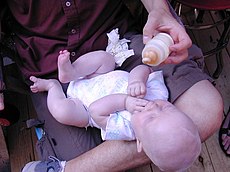
Expressed breast milk (EBM) or infant formula can be
fed to an infant by bottle
Predominant or mixed breastfeeding means feeding breast milk
along with
infant formula,
baby food and even water, depending on the age of the child.
Babies feed differently with artificial teats than from a
breast. With the breast, the infant's tongue massages the milk
out rather than sucking, and the nipple does not go as far into
the mouth; with an artificial teat, an infant will suck harder
and the milk may come in more rapidly. Therefore, mixing
breastfeeding and bottle-feeding (or using a
pacifier) before the baby is used to feeding from its mother
can result in the infant preferring the bottle to the breast.
Orthodontic teats, which are generally slightly longer, are
closer to the nipple. Some mothers supplement feed with a small
syringe or flexible cup to reduce the risk of artificial nipple
preference.
Tandem breastfeeding
Feeding two children at the same time is called tandem
breastfeeding The most common reason for tandem
breastfeeding is the birth of
twins,
although women with closely spaced children can and do continue
to nurse the older as well as the younger. As the appetite and
feeding habits of each baby may not be the same, this could mean
feeding each according to their own individual needs, and can
also include breastfeeding them together, one on each breast.
In cases of
triplets or more, it is a challenge for a mother to organize
feeding around the appetites of all the babies. While breasts
can respond to the demand and produce large quantities of milk,
it is common for women to use alternatives. However, some
mothers have been able to breastfeed triplets successfully
[78][79]
[80].
Tandem breastfeeding may also occur when a woman has a baby
while breastfeeding an older child. During the late stages of
pregnancy the milk will change to colostrum, and some older
nurslings will continue to feed even with this change, while
others may wean due to the change in taste or drop in supply.
Feeding a child while being pregnant with another can also be
considered a form of tandem feeding for the nursing mother, as
she also provides the nutrition for two.[81]
Extended breastfeeding
Breastfeeding past two years is called extended
breastfeeding or "sustained breastfeeding" by supporters and
those outside the U.S.[82]
Supporters of extended breastfeeding believe that all the
benefits of human milk, nutritional, immunological and
emotional, continue for as long as a child nurses. Often the
older child will nurse infrequently or sporadically as a way of
bonding with the mother.[citation
needed]
Shared breastfeeding
It used to be common worldwide, and still is in
developing nations such as those in
Africa, for more than one woman to breastfeed a child.
Shared breastfeeding is a risk factor for
HIV
infection in infants.[83]
A woman who is engaged to breastfeed another's baby is known as
a
wet nurse.
Islam
has
codified the relationship between this woman and the infants
she nurses, and also between the infants when they grow up, so
that milk siblings are considered as blood siblings and
cannot marry. Shared breastfeeding can incur strong negative
reactions in the
Anglosphere[84];
American feminist activist
Jennifer Baumgardner has written about her experiences in
New York with this issue[85].
Weaning
Weaning is the process of introducing the infant to other
food and reducing the supply of breast milk. The infant is fully
weaned when it no longer receives any breast milk. Most mammals
stop producing the
enzyme
lactase at the end of weaning, and become
lactose intolerant. Many humans have a mutation that allows
the production of lactase throughout life and so can drink milk
- usually cow or goat milk - well beyond infancy.[86]
In the past,
bromocriptine was sometimes used to reduce the
engorgement experienced by many women during weaning.
However, it was discovered that when used for this purpose, this
medication posed serious health risks to women, such as
stroke, and the
U.S. Food and Drug Administration withdrew this indication
for the drug in 1994.[87]
History of breastfeeding

Famille d’un Chef Camacan se préparant pour une
Fête ("Family of a Camacan chief preparing for a
Festival") by
Jean-Baptiste Debret shows a woman breastfeeding
a child in the background.
For hundreds of thousands of years, humans, like all other
mammals, fed their young milk. Before the twentieth century,
alternatives to breastfeeding were rare. Attempts in 15th
century Europe to use cow or goat milk were not very positive.
In the 18th century, flour or cereal mixed with broth were
introduced as substitutes for breastfeeding, but this did not
have a favorable outcome, either. True commercial
infant formulas appeared on the market in the mid 19th
Century but their use did not become widespread until after
WWII. As the superior qualities of breast milk became
better-established in medical literature, breastfeeding rates
have increased and countries have enacted measures to protect
the rights of infants and mothers to breastfeed.
Sociological factors with
breastfeeding
Researchers have found several social factors that correlate
with differences in initiation, frequency, and duration of
breastfeeding practices of mothers. Race, ethnic differences and
socioeconomic status and other factors have been shown to affect
a mother’s choice whether or not to breastfeed and how long she
breastfeeds her child.
- Race and culture Singh et al. also found that
African American women are less likely than white women of
similar socioeconomic status to breastfeed and Hispanic
women are more likely to breastfeed. The Center of Disease
Control used information from the National Immunization
Survey to determine the proportion of Caucasian and African
American children that were ever breast fed. They found that
71.5% of Caucasians had breastfed their child while only
50.1% of African Americans had. At six months of age this
fell to 53.9% of Caucasian mothers and 43.2% of African
American mothers who were still breastfeeding.[citation
needed
- Income Deborah L. Dee's research found that women
and children who qualify for
WIC, Special Supplemental Nutrition Program for Women,
Infants, and Children were among those who were least likely
to initiate breastfeeding. Income level can also contribute
to women discontinuing breastfeeding early. More highly
educated women are more likely to have access to information
regarding difficulties with breastfeeding, allowing them to
continue breastfeeding through difficulty rather than
weaning early. Women in higher status jobs are more likely
to have access to a lactation room and suffer less social
stigma from having to breastfeed or express breastmilk at
work. In addition, women who are unable to take an extended
leave from work following the birth of their child are less
likely to continue breastfeeding when they return to work.[citation
needed]
- Other factors Other factors they found to have an
effect on breastfeeding are “household composition,
metropolitan/non-metropolitan residence, parental education,
household income or poverty status, neighborhood safety,
familial support, maternal physical activity, and household
smoking status.”[citation
needed]
Breastfeeding in public
See also
Footnotes
-
^ See
nursing article, dealing with the
healthcare professional concept.
-
^
Picciano M (2001). "Nutrient composition of human milk".
Pediatr Clin North Am 48 (1): 53–67.
doi:10.1016/S0031-3955(05)70285-6.
PMID 11236733.
-
^
Riordan JM (1997). "The cost of not breastfeeding: a
commentary". J Hum Lact 13 (2): 93–97.
doi:10.1177/089033449701300202.
PMID 9233193.
-
^
Horton S, Sanghvi T, Phillips M, et al (1996).
"Breastfeeding promotion and priority setting in
health". Health Policy Plan 11 (2):
156–68.
doi:10.1093/heapol/11.2.156.
PMID 10158457.
-
^
Kramer M, Kakuma R (2002). "Optimal duration of
exclusive breastfeeding". Cochrane Database Syst Rev:
CD003517.
doi:10.1002/14651858.CD003517.
- ^
a
b
Baker R (2003). "Human milk substitutes. An American
perspective". Minerva Pediatr 55 (3):
195–207.
PMID 12900706.
-
^
Agostoni C, Haschke F (2003). "Infant formulas. Recent
developments and new issues". Minerva Pediatr
55 (3): 181–94.
PMID 12900705.
-
^
"Breastfeeding and the Use of Human Milk - AAP policy
statement". February 2005.
http://aappolicy.aappublications.org/cgi/content/full/pediatrics;115/2/496.
Retrieved on 2008-08-08.
- ^
a
b
c
d
"Exclusive Breastfeeding". WHO: Child and
Adolescent Health and Development: Breastfeeding.
http://www.who.int/child_adolescent_health/topics/prevention_care/child/nutrition/breastfeeding/en/index.html.
Retrieved on 2008-09-22.
- ^
a
b
c
d
e
f
g
h
Gartner LM, et al (2005). "Breastfeeding
and the use of human milk". Pediatrics 115
(2): 496–506.
doi:10.1542/peds.2004-2491.
PMID 15687461.
http://aappolicy.aappublications.org/cgi/content/full/pediatrics;115/2/496.
-
^ Secretariat,
World Health Organization (2001-11-24). "Infant
and Young Child Nutrition: Global strategy for infant
and young child feeding" (PDF)., World Health
Organization. WHO Executive Board 109th Session
provisional agenda item 3.8 (EB109/12).
-
^ Dewey KG, Heinig MJ, Nommwen LA. Maternal
weight-loss patterns during the menstrual cycle. Am J
Clin Nutr 1993;58: 162-166
-
^
[1]
-
^ author=W.Sadler,L.Sadler | The Mother and Her
Child | 1916 |Part II
-
^
Denise Fisher.
"Social drugs and breastfeeding".
http://www.health-e-learning.com/content/view/32/63/.
- ^
a
b
"Breastfeeding". Centers for Disease Control and
Prevention.
http://www.cdc.gov/breastfeeding/.
Retrieved on 2007-01-23.
- ^
a
b
c
d
e
"Benefits of Breastfeeding". U.S. Department of
Health and Human Services.
http://www.4woman.gov/breastfeeding/index.cfm?page=227.
Retrieved on 2007-01-23.
-
^
Ip S, Chung M, Raman G, et al (2007).
"Breastfeeding and maternal and infant health outcomes
in developed countries". Evid Rep Technol Assess
(Full Rep) (153): 1–186.
PMID 17764214.
-
^
Kunz C, Rodriguez-Palmero M, Koletzko B, Jensen R
(1999). "Nutritional and biochemical properties of human
milk, Part I: General aspects, proteins, and
carbohydrates". Clin Perinatol 26 (2):
307–33.
PMID 10394490.
-
^
Rodriguez-Palmero M, Koletzko B, Kunz C, Jensen R
(1999). "Nutritional and biochemical properties of human
milk: II. Lipids, micronutrients, and bioactive
factors". Clin Perinatol 26 (2): 335–59.
PMID 10394491.
-
^
Glass RI, Svennerholm AM, Stoll BJ, et al (1983).
"Protection against cholera in breast-fed children by
antibodies in breast milk". N. Engl. J. Med.
308 (23): 1389–92.
PMID 6843632.
-
^
"Nutrition and food security".
http://www.unaids.org/en/PolicyAndPractice/CareAndSupport/NutrAndFoodSupport.
Retrieved on 2008-11-19.
-
^
Villamor E, Koulinska IN, Furtado J, et al
(2007). "Long-chain n-6 polyunsaturated fatty acids in
breast milk decrease the risk of HIV transmission
through breastfeeding". Am. J. Clin. Nutr. 86
(3): 682–9.
PMID 17823433.
-
^
Hilderbrand K., Goemaere E., Coetzee E. (2003). "The
prevention of mother-to-child HIV transmission programme
and infant feeding practices". South African Medical
Journal 93: 779–781.
-
^
Kilewo C., Karlsson, K., Massawe, A., Lyamuya, E.,
Swai,A., Mhalu, F., et al. (2008). "Prevention of
mother-to-child transmission of HIV-1 through
breast-feeding by treating infants prophylactically with
lamivudine in Dar es Salaam, Tanzania.". Epidemiology
and Social Science 48: 315–323.
-
^
Caspi A, Williams B, Kim-Cohen J, et al (2007).
"Moderation of breastfeeding effects on the IQ by
genetic variation in fatty acid metabolism".
Proc. Natl. Acad. Sci. U.S.A. 104 (47):
18860–5.
doi:10.1073/pnas.0704292104.
PMID 17984066. ;
lay-summary
-
^
Horwood LJ, Darlow BA, Mogridge N (2001). "Breast milk
feeding and cognitive ability at 7-8 years". Arch.
Dis. Child. Fetal Neonatal Ed. 84 (1): F23–7.
doi:10.1136/fn.84.1.F23.
PMID 11124919.
-
^
Perez-Bravo F, Carrasco E, Gutierrez-Lopez MD, Martinez
MT, Lopez G, de los Rios MG (1996). "Genetic
predisposition and environmental factors leading to the
development of insulin-dependent diabetes mellitus in
Chilean children". J. Mol. Med. 74 (2):
105–9.
doi:10.1007/BF00196786.
PMID 8820406.
-
^
Owen CG, Martin RM, Whincup PH, Smith GD, Cook DG
(2006). "Does breastfeeding influence risk of type 2
diabetes in later life? A quantitative analysis of
published evidence". Am. J. Clin. Nutr. 84
(5): 1043–54.
PMID 17093156.
- ^
a
b
Mayer-Davis EJ, Dabelea D, Lamichhane AP, et al
(2008). "Breast-feeding and type 2 diabetes in the youth
of three ethnic groups: the SEARCh for diabetes in youth
case-control study". Diabetes Care 31 (3):
470–5.
doi:10.2337/dc07-1321.
PMID 18071004.
-
^
Armstrong J, Reilly JJ (2002). "Breastfeeding and
lowering the risk of childhood obesity". Lancet
359 (9322): 2003–4.
doi:10.1016/S0140-6736(02)08837-2.
PMID 12076560.
-
^
Arenz S, Rückerl R, Koletzko B, von Kries R (2004).
"Breast-feeding and childhood obesity--a systematic
review". Int. J. Obes. Relat. Metab. Disord.
28 (10): 1247–56.
doi:10.1038/sj.ijo.0802758.
PMID 15314625.
-
^
Kramer MS, Matush L, Vanilovich I, et al (2007).
"Effect of prolonged and exclusive breast feeding on
risk of allergy and asthma: cluster randomised trial".
BMJ 335 (7624): 815.
doi:10.1136/bmj.39304.464016.AE.
PMID 17855282.
- ^
a
b
Mead MN (2008). "Contaminants
in human milk: weighing the risks against the benefits
of breastfeeding". Environ Health Perspect
116 (10): A426–34.
PMID 18941560.
http://www.ehponline.org/members/2008/116-10/focus.html.
-
^
Akobeng AK, Ramanan AV, Buchan I, Heller RF (2006).
"Effect of breast feeding on risk of coeliac disease: a
systematic review and meta-analysis of observational
studies". Arch. Dis. Child. 91 (1): 39–43.
doi:10.1136/adc.2005.082016.
PMID 16287899.
-
^
[2]
-
^
Mårild S, Hansson S, Jodal U, Odén A, Svedberg K (2004).
"Protective effect of breastfeeding against urinary
tract infection". Acta Paediatr. 93 (2):
164–8.
doi:10.1080/08035250310007402.
PMID 15046267.
-
^
Blaymore Bier JA, Oliver T, Ferguson A, Vohr BR (2002).
"Human milk reduces outpatient upper respiratory
symptoms in premature infants during their first year of
life". J Perinatol 22 (5): 354–9.
doi:10.1038/sj.jp.7210742.
PMID 12082468.
-
^
Owen MJ, Baldwin CD, Swank PR, Pannu AK, Johnson DL,
Howie VM (1993). "Relation of infant feeding practices,
cigarette smoke exposure, and group child care to the
onset and duration of otitis media with effusion in the
first two years of life". J. Pediatr. 123
(5): 702–11.
doi:10.1016/S0022-3476(05)80843-1.
PMID 8229477.
-
^
Dewey KG, Heinig MJ, Nommsen-Rivers LA (1995).
"Differences in morbidity between breast-fed and
formula-fed infants". J. Pediatr. 126 (5
Pt 1): 696–702.
doi:10.1016/S0022-3476(95)70395-0.
PMID 7751991.
-
^
Greer FR, Sicherer SH, Burks AW (2008). "Effects of
early nutritional interventions on the development of
atopic disease in infants and children: the role of
maternal dietary restriction, breastfeeding, timing of
introduction of complementary foods, and hydrolyzed
formulas".
Pediatrics 121 (1): 183–91.
doi:10.1542/peds.2007-3022.
PMID 18166574.
-
^
Oddy WH, Holt PG, Sly PD, et al (1999).
"Association between breast feeding and asthma in 6 year
old children: findings of a prospective birth cohort
study". BMJ 319 (7213): 815–9.
PMID 10496824.
-
^
Pratt HF (1984). "Breastfeeding and eczema". Early
Hum. Dev. 9 (3): 283–90.
doi:10.1016/0378-3782(84)90039-2.
PMID 6734490.
-
^
Lucas A, Cole TJ (1990). "Breast milk and neonatal
necrotising enterocolitis". Lancet 336
(8730): 1519–23.
doi:10.1016/0140-6736(90)93304-8.
PMID 1979363.
-
^
Horne RS, Parslow PM, Ferens D, Watts AM, Adamson TM
(2004). "Comparison of evoked arousability in breast and
formula fed infants". Arch. Dis. Child. 89
(1): 22–5.
PMID 14709496.
-
^
Feldman S (July-August 2000). "Nursing
Through Pregnancy". New Beginnings (La Leche
League International) 17 (4): pp. 116–118, 145.
http://www.lalecheleague.org/NB/NBJulAug00p116.html.
Retrieved on 2007-03-15.
-
^
Gunderson, Erica P. (February, 2009). "Prospective
evidence that lactation protects against cardiovascular
disease in women". American Journal of Obstetrics &
Gynecology 200 (2): 119–120.
doi:10.1016/j.ajog.2008.10.001.
-
^
Rosenblatt K, Thomas D (1995). "Prolonged lactation and
endometrial cancer. WHO Collaborative Study of Neoplasia
and Steroid Contraceptives". Int J Epidemiol
24 (3): 499–503.
PMID 7672888.
-
^
Newcomb P, Trentham-Dietz A (2000). "Breast feeding
practices in relation to endometrial cancer risk, USA".
Cancer Causes Control 11 (7): 663–7.
doi:10.1023/A:1008978624266.
PMID 10977111.
-
^
Melton III L; Bryant S, Wahner H, O'Fallon W, Malkasian
G, Judd H, Riggs B (March 1993). "Influence of
breastfeeding and other reproductive factors on bone
mass later in life". Osteoporosis International
(London: Springer) 3 (2): 76.
doi:10.1007/BF01623377.
PMID 8453194.
-
^
Rayburn W, Piehl E, Lewis E, Schork A, Sereika S,
Zabrensky K (1985). "Changes in insulin therapy during
pregnancy". Am J Perinatol 2 (4): 271–5.
doi:10.1055/s-2007-999968.
PMID 3902039.
- ^
a
b
Chua S, Arulkumaran S, Lim I, Selamat N, Ratnam S
(1994). "Influence of breastfeeding and nipple
stimulation on postpartum uterine activity". Br J
Obstet Gynaecol 101 (9): 804–5.
PMID 7947531.
-
^
Sir-Petermann T, Devoto L, Maliqueo M, Peirano P,
Recabarren S, Wildt L (2001). "Resumption
of ovarian function during lactational amenorrhoea in
breastfeeding women with polycystic ovarian syndrome:
endocrine aspects". Hum Reprod 16 (8):
1603–10.
doi:10.1093/humrep/16.8.1603.
PMID 11473950.
http://humrep.oxfordjournals.org/cgi/content/full/16/8/1598.
-
^
Pisacane A, Continisio GI, Aldinucci M, D'Amora S,
Continisio P (2005). "A
controlled trial of the father's role in breastfeeding
promotion". Pediatrics 116 (4):
e494–8.
doi:10.1542/peds.2005-0479.
PMID 16199676.
http://pediatrics.aappublications.org/cgi/pmidlookup?view=long&pmid=16199676.
-
^
Van Willigen, John; John van Willigen (2002). Applied
anthropology: an introduction. New York: Bergin &
Garvey.
ISBN 0897898338.
-
^
Dettwyler K; Stuart-Macadam P (1995).
Breastfeeding: Biocultural Perspectives. Aldine
Transaction. pp. p. 131.
ISBN 978-0-202-01192-9.
-
^
Dewey K, Heinig M, Nommsen L (1993). "Maternal
weight-loss patterns during prolonged lactation". Am
J Clin Nutr 58 (2): 162–6.
PMID 8338042.
-
^
Lovelady C, Garner K, Moreno K, Williams J (2000). "The
effect of weight loss in overweight, lactating women on
the growth of their infants". N Engl J Med 342
(7): 449–53.
doi:10.1056/NEJM200002173420701.
PMID 10675424.
-
^
Price C; Robinson S (2004). Birth: Conceiving,
Nuturing and Giving Birth to Your Baby. McMillan.
pp. p. 489.
ISBN 1-4050-3612-5.
-
^
"Infant and young child nutrition: Global strategy for
infant and young child feeding" (pdf).
World Health Organization. 2001-11-24.
http://www.who.int/gb/ebwha/pdf_files/EB109/eeb10912.pdf.
Retrieved on 2008-03-13.
-
^
Newman J; Pitman T (2000). Dr. Jack Newman's
guide to breastfeeding. HarperCollins Publishers.
ISBN 0006385680.
-
^
"Weight gain (Growth patterns)". AskDrSears.com.
http://www.askdrsears.com/html/2/T023600.asp.
Retrieved on 2007-04-03.
-
^
Mohrbacher, Nancy; Stock, Julie (2003). The
Breastfeeding Answer Book (3rd ed. (revised) ed.).
La Leche League International.
ISBN 0-912500-92-1.
-
^ Widstrom AM, Wahlberg V, Matthiesen AS,
Eneroth P, Uvnas-Moberg K, Werner S, et al. Short-term
effects of early suckling and touch of the nipple on
maternal behavior. Early Hum Dev 1990; 21:153-63.
-
^ Renfrew MJ, Lang S. Early versus delayed
initiation of breastfeeding. In: The Cochrane Library
[on CD-ROM]. Oxford: Update Software;1998.
-
^
"Infant feeding – Breast or bottle and how to breast
feed".
http://www.patient.co.uk/showdoc/40002328/.
Retrieved on 2007-05-26.
-
^ V Livingstone. The Art of Successful
Breastfeeding [VHS]. Vancouver, BC, Canada: New
Vision Media Ltd..
- ^
a
b
"Proper positioning and latch-on skills".
AskDrSears.com. 2006.
http://www.askdrsears.com/html/2/T021000.asp.
Retrieved on 2008-09-24.
-
^
Natural Birth and Baby Care.com
-
^
"Breastfeeding Guidelines". Rady Children's Hospital
San Diego.
http://www.chsd.org/1438.cfm.
Retrieved on 2007-03-04.
-
^
Paul I, Lehman E, Hollenbeak C, Maisels M (2006).
"Preventable newborn readmissions since passage of the
Newborns' and Mothers' Health Protection Act".
Pediatrics 118 (6): 2349–58.
doi:10.1542/peds.2006-2043.
PMID 17142518.
-
^
http://www.drpaul.com/breastfeeding/colostrum.html
-
^
Iwinski S (2006), "Is
Weighing Baby to Measure Milk Intake a Good Idea?",
LEAVEN 42 (3): 51–3,
http://www.lalecheleague.org/llleaderweb/LV/LVJulAugSep06p51.html,
retrieved on 2007-04-08
-
^
Hanna N; Ahmed K, Anwar N, Petrova A, M Hiatt M, Hegyi T
(November 2004). "Effect of storage on breast milk
antioxidant activity". Arch Dis Child Fetal Neonatal
Ed (BMJ Publishing Group Ltd) 89 (6): pp.
F518–20.
doi:10.1136/adc.2004.049247.
PMID 15499145.
-
^
Arlene Eisenberg (1989). What to Expect the First
Year. Workman Publishing Company.
ISBN 0894805770.
-
^
Spatz D (2006). "State of the science: use of human milk
and breast-feeding for vulnerable infants". J Perinat
Neonatal Nurs 20 (1): 51–5.
PMID 16508463.
-
^
Tully DB, Jones F, Tully MR (2001). "Donor
milk: what's in it and what's not".
J Hum Lact 17 (2): 152–5.
doi:10.1177/089033440101700212.
PMID 11847831.
http://jhl.sagepub.com/cgi/pmidlookup?view=long&pmid=11847831.
-
^
Grunberg R (1992). "Breastfeeding
multiples: Breastfeeding triplets". New
Beginnings 9 (5): 135–6.
http://www.lalecheleague.org/NB/NBSepOct92p135.html.
-
^ Australian Breastfeeding Association:
Breastfeeding triplets, quads and higher
-
^ Association of Radical Midwives:
Breastfeeding triplets
-
^
Flower H (2003). Adventures in Tandem Nursing:
Breastfeeding During Pregnancy and Beyond. La Leche
League International.
ISBN 978-0912500973.
-
^
La Leche League International.
"Report from the Board: Update from the LLLI Board of
Directors". LLL.
http://lalecheleague.org/llleaderweb/LV/LVAprMay03p26.html.
Retrieved on 2007-08-02.
-
^
Alcorn K (2004-08-24).
"Shared breastfeeding identified as new risk factor for
HIV". Aidsmap.
http://www.aidsmap.com/en/news/72E08565-12B7-43CF-A71E-7A57292B30DF.asp.
Retrieved on 2007-04-10.
-
^
Guardian Unlimited: Not your mother's milk
-
^ Jennifer Baumgardner, Breast Friends,
Babble, 2007
-
^
http://www.aafp.org/afp/20020501/1845.html
Aapf.org
-
^
http://www.fda.gov/bbs/topics/ANSWERS/ANS00594.html
FDA.gov
References
-
Hausman, Bernice (2003). Mother's Milk: Breastfeeding
Controversies in American Culture. New York: Routledge.
ISBN 0-415-96656-6.
-
Huggins, Kathleen (1999). The Nursing Mother's Companion
(4th ed.). Harvard Common Press.
ISBN 1-55832-152-7.
-
Mohrbacher N, Stock J (2003). The Breastfeeding Answer
Book. La Leche League International, Schaumburg,
Illinois.
ISBN 0-912500-92-1.
-
Stuart-Macadam P,
Dettwyler K (1995). Breastfeeding: Biocultural
Perspectives (Foundations of Human Behavior). Aldine de
Gruyter.
ISBN 0-202-01192-5.
-
Leeson C, Kattenhorn M, Deanfield J, Lucas A (2001).
"Duration of breast feeding and arterial distensibility in
early adult life: population based study". BMJ 322
(7287): 643–7.
doi:10.1136/bmj.322.7287.643.
PMID 11250848.
-
Health risks of not breastfeeding US Department of
Health & Human Service
-
Kilewo C., Karlsson, K., Massawe, A., Lyamuya, E., Swai,A.,
Mhalu, F., et al. (2008). "Prevention of mother-to-child
transmission of HIV-1 through breast-feeding by treating
infants prophylactically with lamivudine in Dar es Salaam,
Tanzania.". Epidemiology and Social Sceience 48:
315–323.
-
Coutsoudis, A., Goga, AE, Rollins, N., Coovadia, HM. (2002).
"Free formula milk for infants of HIV positive women:
blessing or curse?". Health Policy and Planning 17:
154–160..
doi:10.1093/heapol/17.2.154.
PMID 12000775.
External links
|
updated: 23 August, 2019
|


























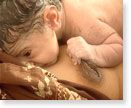 Initiation of Breastfeeding by Breast Crawl